Wire vs. Sinker EDM at Area Tool: Which Process Is Right for Your Part?
At Area Tool & Manufacturing, we have extensive experience with both wire and sinker EDM, so our expert team is ready for complex geometries. If you have a tough feature you think requires EDM, we can help you understand which option makes the most sense.
Here’s how we choose an efficient manufacturing strategy for your part.
How EDM Processes Differ
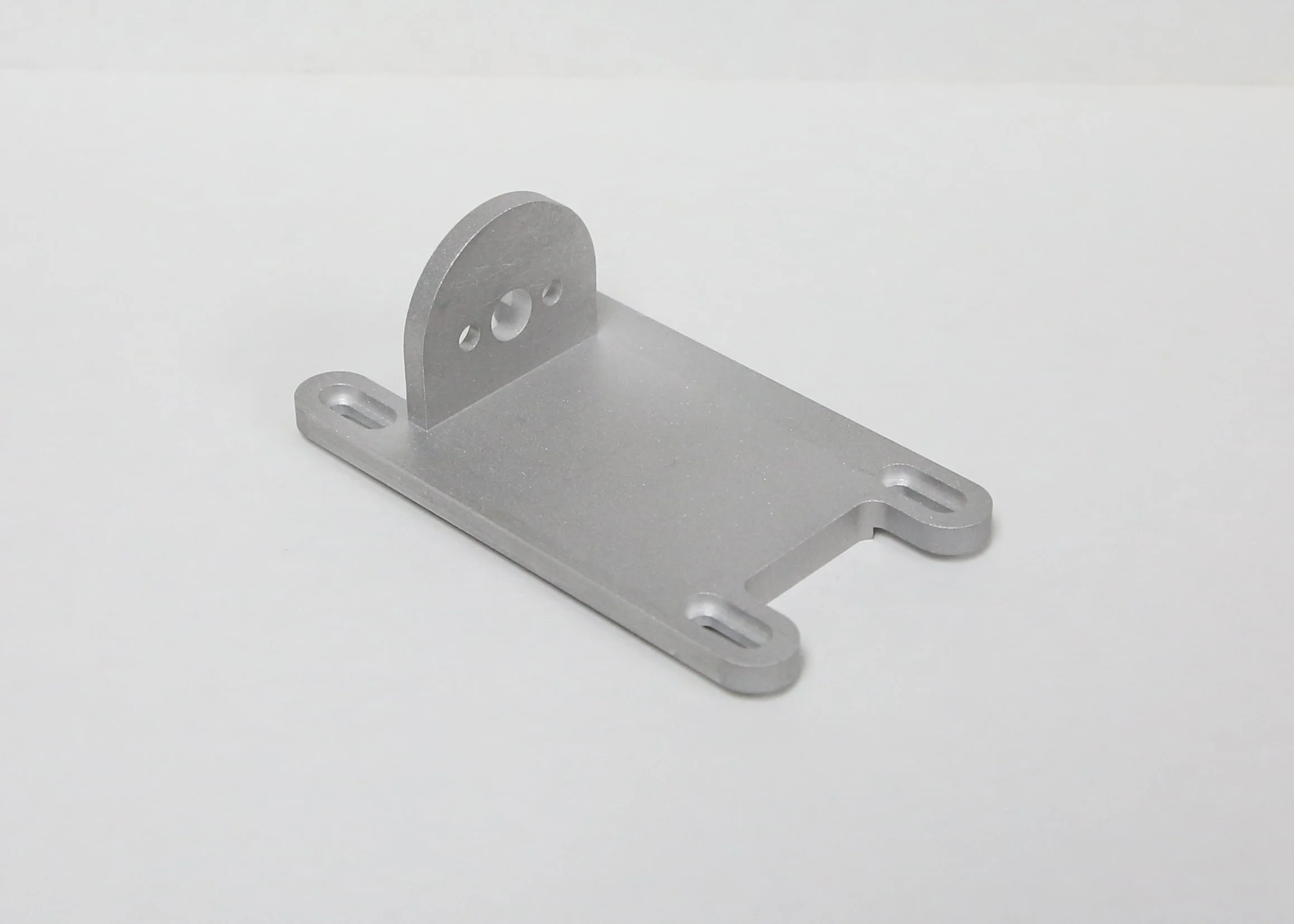
Both wire and sinker EDM use electrical discharges to erode material and create a part’s features. They work very differently from processes like milling: neither relies on a rotating cutting tool physically removing material from the piece.
Wire EDM uses a wire electrode that follows a programmed cutting path. Sinker EDM uses a shaped electrode to create a cavity in the workpiece that matches the electrode’s shape. Both processes will only work for parts made from electrically conductive materials.
These processes are valuable for hardened materials, as well as intricate features that may be difficult to produce with conventional cutting tools. But the differences between them determine which features they’re best suited for.
Wire EDM: Great for Precise Profiles and Through-Cut Features
Wire EDM is particularly useful when a feature extends all the way through the piece. It’s commonly used for features like intricate internal openings and narrow through-slots.
For an enclosed internal opening, we need a start hole to thread the wire through the workpiece. Our Current EDM CNC DrillMate lets us create those holes easily, and that supports the work performed on our Makino U3 and U6 machines.
Wire EDM machining also gives us flexibility in our production strategy. For instance, when a part requires heat treatment, we can wait until that process is done to cut critical features. That way, if heat treatment causes dimensional changes, we can account for them when cutting those features to their final dimensions.
Another approach we use is starting with pre-hardened stock. For parts whose profiles and through-openings can be wire-cut, we can complete the job on the wire EDM instead of milling it and then heat treating it. That can simplify production and shorten lead times.
Sinker EDM: Blind Cavities and Intricate Recessed Features
With blind features (features that stop inside the part instead of going all the way through), sinker EDM is usually the better fit.
A rectangular blind pocket is a good example: we need to create the pocket while leaving material beneath it. To create that, we machine a custom electrode to the necessary shape, then use it to remove material and form the pocket.
Deep, narrow recesses and features with small internal corner radii are other common candidates for sinker EDM. In conventional machining, very small corner radii can be difficult to achieve because the end mill’s size limits how tight an inside corner it can cut. Sinker EDM can’t create a perfectly sharp inside corner, but it lets us achieve much smaller corner radii when the design calls for them.
At Area Tool, our sinker EDM work is primarily for medical and electronics applications. Our Makino EDAF2 combines accuracy and surface finish capability for both prototype work and production runs.
We’ll Choose the Right Approach for Your Part
Through-cut versus blind geometry is a common starting point in deciding between wire and sinker EDM. But there are many other considerations involved, from tolerances to quantity. Sinker EDM also involves custom electrodes, so that has to be taken into account in understanding cost and schedule.
Some parts might benefit from combining EDM with other capabilities in our shop, such as milling or turning.
Ultimately, you don’t have to make this decision on your own. We’ll evaluate your part and select the process (or combination of processes) that best meets your requirements. Contact us today to discuss your project.